
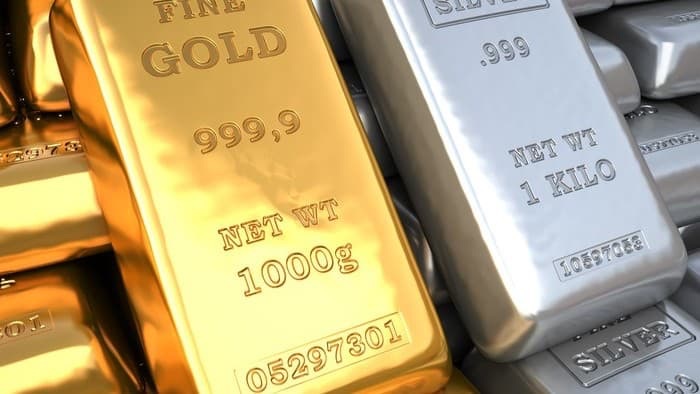
In an unprecedented shock to commodity markets, precious metals — long considered a safe haven against inflation and geopolitical risk — plunged sharply after former U.S. President Donald Trump announced his intention to nominate Kevin Warsh as the next Federal Reserve Chair. The move triggered a severe sell-off in gold and silver, collectively erasing an estimated US $15 trillion in market value within 24 hours — roughly equivalent to half the size of the entire U.S. economy.
Historic Plunge in Metal Prices
Gold and silver, which had been on a remarkable rally over the past year, suffered their worst daily moves in decades:
Silver plunged as much as 30–33 per cent, briefly trading near US $77–80 per ounce — its steepest single-day fall since 1980. Gold fell roughly 10–12 per cent, dropping from recent peaks above US $5,500 to levels near US $4,700–4,800 per ounce.
The magnitude and speed of the declines sent shockwaves through related markets, with mining stocks and other commodities such as copper selling off sharply as well.
What Triggered the Sell-Off?
At the heart of the turmoil was the market’s reassessment of future U.S. monetary policy. Warsh — a former Federal Reserve governor with a reputation for monetary discipline — is widely expected to preserve the Fed’s independence and avoid the kind of aggressive interest-rate cuts that many investors had been speculating on.
Key elements in the market reaction included:
1. Stronger U.S. Dollar
Warsh’s nomination coincided with a rapid strengthening of the U.S. dollar — its largest single-day jump in months — making dollar-priced commodities like gold and silver more expensive for buyers using other currencies.
2. Interest-Rate Expectations Shift
The prospect of a more orthodox Fed leadership reduced expectations of easing monetary policy, which had been a major driver of precious metal prices. Higher real yields and tighter liquidity tend to make non-yielding assets like gold and silver less attractive.
3. Leverage and Forced Selling
Markets were already crowded with leveraged long positions in precious metals. When prices began to fall, forced liquidations and margin calls accelerated the downturn.
Beyond Metals: Broader Market Impact
The sell-off in precious metals did not occur in isolation. Risk assets also felt the tremors:
Major U.S. equity indices — including the S&P 500, Dow Jones, and Nasdaq — moved lower as investors recalibrated risk amid uncertainty over the Fed’s future direction. Commodity sectors, particularly mining and materials, experienced significant declines.
Even cryptocurrencies such as Bitcoin saw downward pressure, reflecting a broader retrenchment in speculative assets.
Is This a Market Correction or Structural Shift?
Analysts are divided. Some view the plunge as a blow-off top correction after a prolonged rally that had stretched valuations beyond sustainable levels. Others warn it could signal a deeper repricing of safe-haven assets in an era of stronger monetary policy and a firmer dollar.
One key consideration is that gold and silver entered Friday’s session after extended gains — with silver up more than 150 per cent over the past year and gold up roughly 65 per cent — making markets particularly vulnerable to a trigger event.
Looking Ahead
Investors now face a range of considerations:
Will the Fed under Warsh pursue a tighter bias? Markets will closely watch signals from the Fed on interest-rate policy and balance-sheet management. How will macro forces evolve? Inflation data, yield curves, and currency trends will be crucial in determining whether precious metals can stabilize or continue to slide. Is this a buying opportunity? Some market participants see the correction as an entry point after an overextended rally, while others urge caution given the scale of recent volatility.
In summary, Trump’s appointment of Kevin Warsh as Federal Reserve chair has not only reshaped expectations for U.S. monetary policy but also sparked one of the most dramatic sell-offs in gold and silver markets in decades — wiping out trillions in perceived value and reverberating across global financial markets. The coming weeks will be critical in determining whether this represents a temporary correction or a fundamental shift in the outlook for safe-haven assets.